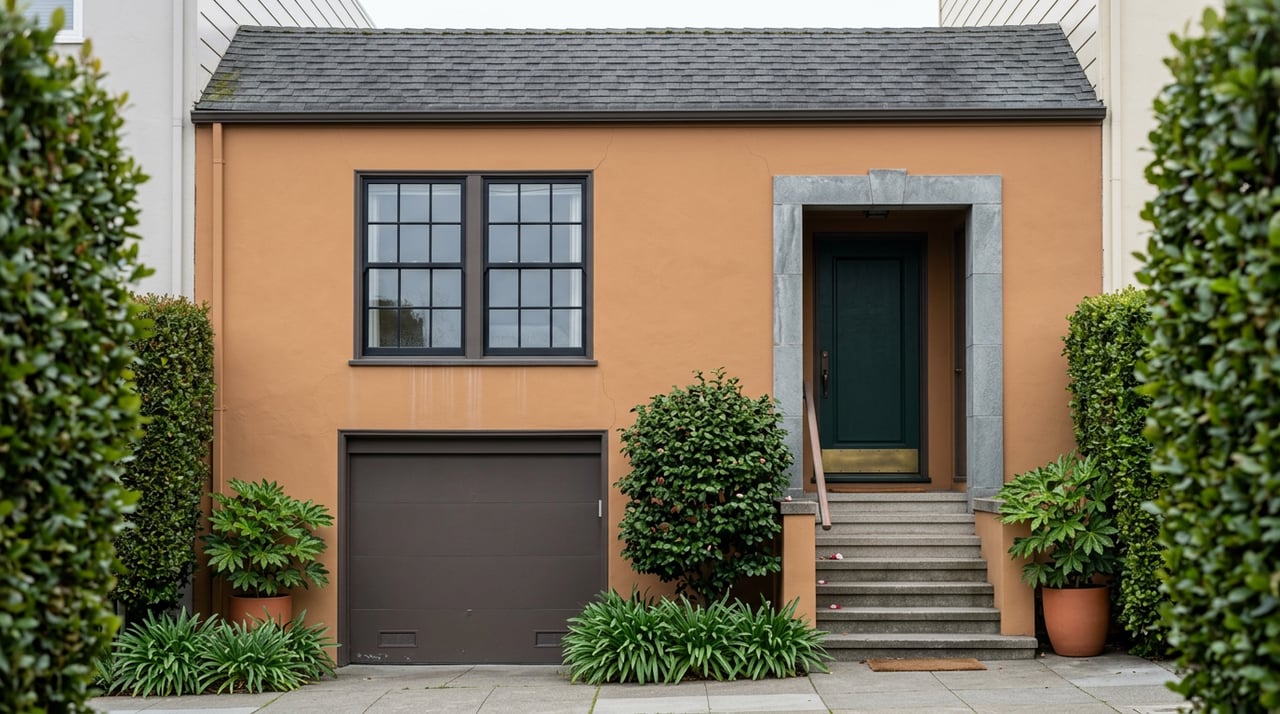
Picture two open houses on the same Saturday afternoon, both on San Francisco's west side, both roughly the same distance from downtown. The one in the Sunset is listed at $1.3 million. The one in the Richmond is listed at $1.6 million. A buyer working off list price alone books a mental note: the Sunset is the value play, the Richmond is the reach.
By the time offers are due ten days later, that note is wrong. The Sunset home closes for something closer to $1.67 million. The gap the buyer thought they saw on day one has mostly disappeared by the time anyone signs anything. This isn't a fluke of one hot listing. It's how pricing works on this side of the city, and it's the piece of the Sunset-versus-Richmond comparison that a median-price headline never explains.
What Two List Prices Actually Compare
San Francisco's west side runs on what amounts to an underpricing convention, and the two districts don't apply it evenly. In closed sales tracked across a full year through mid-July 2026, 89 percent of houses in the Sunset and Parkside area sold over their list price, with a median list-to-sale ratio of 128.4 percent, the sharpest gap of any district in the city. The median winning bid came in $430,000 over asking. In the Richmond, 88 percent of houses also sold over list, with a median overbid of $522,500 on a $2.49 million median sale price.
Read those two numbers side by side and the story changes. The Richmond's overbid is larger in dollars, but it's layered on top of a higher starting price. The Sunset's overbid is smaller in dollars but represents a much bigger percentage jump from where the home was priced to where it actually sold. In practice, that means a Sunset list price tells you less about what the home will cost than a Richmond list price does. Agents in the Sunset are pricing further below their own expectation of value, which produces a bigger, more dramatic-looking bidding war and a headline number that undersells the real cost of winning.
The Half-Year That Just Closed
The first six months of 2026 show the same pattern playing out at the district level. In the Richmond, 92 single-family homes sold, up from 79 over the same period in 2025, a 16.5 percent increase in volume. The median price rose 17.6 percent, from $2,305,000 to $2,711,700, and homes moved fast, with median days on market falling to 10.
In the Sunset, 205 single-family homes sold in the same window, up from 198 a year earlier, a smaller 3.5 percent increase. The median price rose 13.6 percent, from $1,650,000 to $1,875,000, with days on market holding steady at 12.
| Richmond, H1 2026 | Sunset, H1 2026 | |
|---|---|---|
| Homes sold | 92 (+16.5% YoY) | 205 (+3.5% YoY) |
| Median price | $2,711,700 (+17.6% YoY) | $1,875,000 (+13.6% YoY) |
| Median days on market | 10 | 12 |
Across San Francisco overall, single-family sales rose 2.1 percent and the median price climbed 18.2 percent over the same six months, with the citywide single-family median crossing $2,000,000 for the first time. Both west-side districts are appreciating faster than that citywide pace on a percentage basis, but they're doing it from very different bases and at very different volumes. The Richmond is a smaller, higher-priced market where fewer homes trade and each one moves the median more. The Sunset is a higher-volume market built on a more uniform housing type, which is part of why its bidding-war percentage runs hotter even as its dollar figures look smaller.
Why the Housing Stock Explains the Spread
The price gap between the two districts isn't just a pricing convention. It's also a reflection of what's actually for sale. The Sunset's housing stock is famously consistent, built out largely as tract housing from the 1920s through the 1950s, with the classic one-story-over-garage layout repeating block after block. That consistency is exactly why the Sunset produces more sales at a lower median. There are simply more similar, smaller homes changing hands.
The Richmond's housing stock is more of a mix: nineteenth-century cottages sit near Edwardian flats, larger single-family houses, and apartment infill. That variety pulls the median higher and produces fewer, larger transactions rather than a steady stream of comparable ones. A buyer comparing "the Richmond" to "the Sunset" as if they're two versions of the same product is comparing a district built around one recurring floor plan to a district built around several different ones.
The Fog Doesn't Pick a Side, But Your Block Does
Both districts sit under San Francisco's marine layer for a good part of the summer, while neighborhoods on the east side of the city, like the Mission, Bernal Heights, and Potrero Hill, see more direct sun on the same afternoon. That much is shared between the Sunset and the Richmond, so fog exposure alone doesn't explain why one costs more than the other. What it does explain is the variation within each district. Outer Sunset, closest to Ocean Beach, runs cooler, windier, and foggier than blocks further inland. The same pattern holds in the Outer Richmond, where lower-lying blocks catch more of the marine layer than the bluffs near Land's End.
Transit tells a similar story of two different personalities rather than a clear winner. The Sunset is built around the N Judah, which runs from the coast through the Sunset Tunnel into downtown stops including Civic Center, Powell, Montgomery, and Embarcadero. The Richmond leans more heavily on buses, with the 1 California and Geary corridors, including the 38 Geary Rapid, connecting to the Salesforce Transit Center. Neither commute is objectively faster. They're just different enough that a buyer choosing between the two districts is also choosing a daily transit habit, not just a price point.
What This Means If You're Actually Comparing the Two
If you're underwriting a purchase in either district, the list price is the least useful number on the listing sheet. A more useful exercise is to work backward from the district's typical list-to-sale behavior. In the Sunset, expect to plan for an offer meaningfully above 20 percent over list on a competitive home, based on the 128.4 percent median ratio from the past year of closings, the sharpest gap of any district in the city. In the Richmond, expect a similarly competitive posture but at a higher dollar floor, since the district's median overbid has been running above half a million dollars on a median sale price near $2.49 million over the same period.
That distinction matters most at the financing stage. A buyer who structures a pre-approval around a Sunset home's list price alone is often underfunded by the time an accepted offer comes back. The same is true in the Richmond, just at a higher dollar threshold. In both districts, days on market has been sitting near two weeks, which doesn't leave much runway to renegotiate financing once you're in a bidding situation. The smart move is to have your lender underwrite you to the district's real closing behavior, not its list price, before you ever walk into an open house.
Frequently Asked Questions
Does a lower list price in the Sunset mean it's genuinely more affordable than the Richmond? Not by itself. The Sunset's median sale price is lower, but its list-to-sale ratio has been running higher than the Richmond's, which means the gap between what's advertised and what it actually takes to win narrows once you look at closing prices rather than list prices.
Why do both districts have such short days-on-market numbers? Both districts have been converting fast, with the Richmond at a median of 10 days and the Sunset at 12 days in the first half of 2026. That pace is a byproduct of the underpricing convention itself. Homes priced below expected value generate immediate offer activity, which shortens the runway between listing and acceptance.
Should the fog factor into which district I choose? It's worth weighing block by block rather than district by district. Both the Sunset and the Richmond see marine layer conditions through the summer, but how much depends more on proximity to the coast within each district than on which district you're in overall.
If you're weighing a move to San Francisco's west side and want the closing-price math worked out before you write an offer, not after, Perry Kayasone can walk you through what a specific block has actually been selling for. Call Perry.