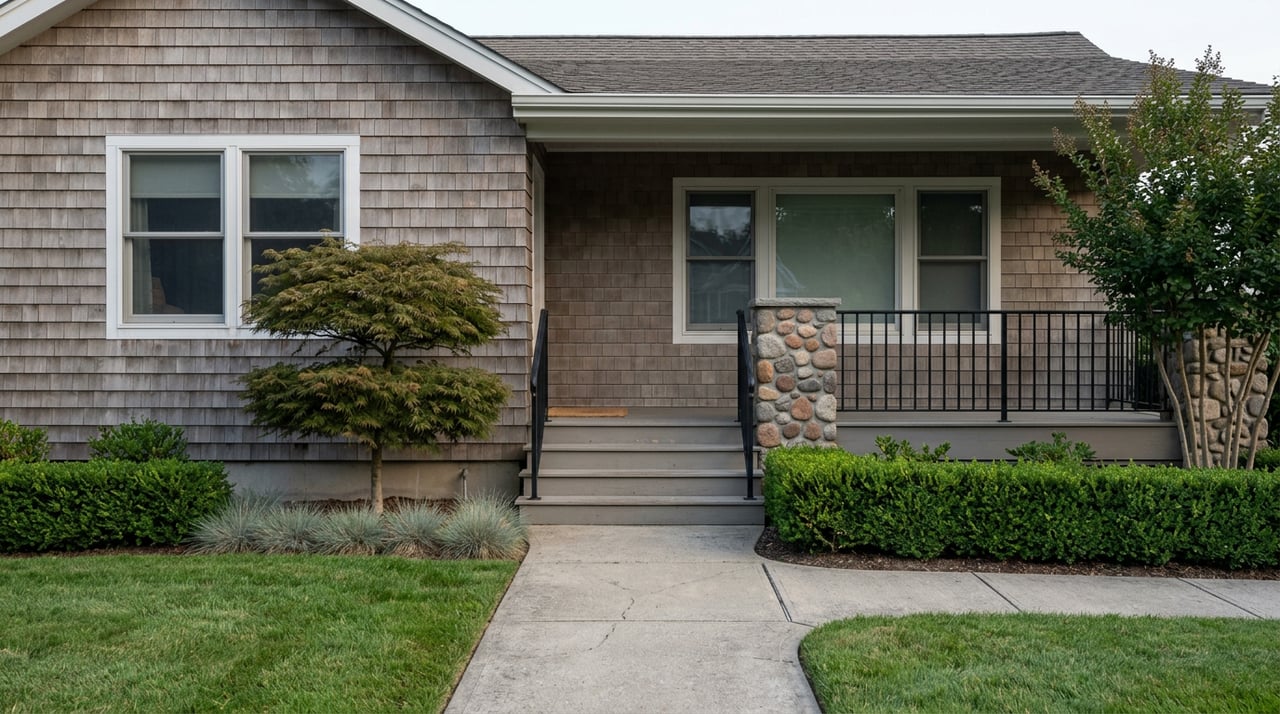
Drive from Burlingame into San Mateo and nothing about the street changes. Same stucco bungalows, same eucalyptus canopy, same real estate agent showing both blocks on a Saturday afternoon. But cross that municipal line with a house under contract, and the rules for closing escrow change completely. One city might require a city inspector to physically witness a pressurized pipe test before your buyer can get keys. The next city over might not ask about your sewer lateral at all.
That is the thesis worth sitting with if you are buying or selling anywhere on the Peninsula this year: San Mateo County does not have a sewer lateral rule. It has at least ten different ones, stacked city by city, with different triggers, different test methods, and one city whose own status is genuinely unresolved right now. Treating this as a single countywide checkbox is the mistake that turns a routine closing into a five-week delay.
What a Sewer Lateral Certificate Actually Requires
A sewer lateral is the pipe running from a house to the city sewer main, and in most of these cities the homeowner owns everything on the private side of the property line. Over decades, especially in homes built with clay pipe, that line cracks, roots intrude, and joints separate. Groundwater seeps in and overwhelms the city's treatment system, which is the public health problem these ordinances exist to solve.
The transactional consequence is what matters here. In a subset of San Mateo County cities, the sale of real property is one of the events that legally requires a lateral inspection, and a failing result means repair or replacement has to happen before title can transfer. This is not a disclosure form where you check a box and move on. It is a closing condition, and it lands on whichever party the local ordinance assigns, which in practice is almost always the seller.
The Patchwork, City by City
| City | Sale Trigger a Certificate? | Who It Applies To | Test Method |
|---|---|---|---|
| San Mateo | Yes, one of four ordinance triggers | Detached one and two family homes | Method chosen by the seller's licensed plumber |
| Burlingame | Yes, Ordinance 1329 | Buildings 25 years or older | Witnessed infiltration test, city rep must observe |
| Hillsborough | Yes | All sales, with recent-test exemption | Video camera, or water test where the lateral meets the main in the right-of-way |
| San Bruno | Yes, Municipal Code 10.13 | Homes originally built 50+ years ago | Inspection plus compliance certificate |
| Millbrae | Yes, Municipal Code 8.20.450 | All sales | In-line closed circuit video |
| Pacifica | Yes, Ordinance 784 C.S. | Triggered at sale and other status changes | DVD video submission |
| South San Francisco | Yes | All sales | City-specified inspection per the city's point-of-sale fact sheet |
| Belmont, San Carlos | Remodel or conversion only | Not automatic at sale | Video, when triggered |
| Brisbane | Disclosure requirement, Municipal Code 13.04.431 | Sellers must disclose lateral condition | Not a hard test gate in the same sense |
| Redwood City | Unresolved | Status contested between sources | Unknown |
| Daly City | No lateral certificate | A general building record report instead | Not applicable |
Seven cities, San Mateo, Burlingame, Hillsborough, San Bruno, Millbrae, Pacifica, and South San Francisco, will not let escrow close without a passing result. Belmont and San Carlos only care if you are pulling a remodel or conversion permit. Brisbane's obligation reads more like a disclosure duty tied to its own municipal code than a hard testing gate. And Daly City residents, along with owners in Foster City, Half Moon Bay, and Colma, currently face no sewer-specific certificate requirement at sale at all, though Daly City does require a separate building record report.
Burlingame's Numbers Tell You Why This Matters
The reason these ordinances exist in older housing stock is that the pipes genuinely fail at a meaningful rate. In Burlingame, roughly half of the homes tested since the ordinance took effect in 1986 have required repair or replacement. That is not a rare surprise buried in an inspection report. That is closer to a coin flip for any pre-1990s Burlingame home entering escrow.
Burlingame's ordinance is also the strictest on method. A video camera alone does not satisfy it. Ordinance 1329 requires a witnessed infiltration test, meaning a city representative has to be present to watch the pipe get pressurized and checked, for any building 25 years or older before the sale can close. A passing result is valid for 10 years, or 25 years if the lateral was fully replaced.
The One City Nobody Can Agree On
Every other city on this list has a documented, citable answer. Redwood City does not, at least not yet. One compliance table published in 2025 lists no point-of-sale sewer lateral requirement there. A separate news report from March 2026, from Palo Alto Online and The Almanac, states the opposite, that Redwood City adopted its own lateral ordinance.
Those two claims cannot both be current. Rather than repeat whichever one sounds more recent, the honest answer for anyone listing or writing an offer in Redwood City right now is to call the city's Public Works department directly and get it in writing before you assume either way. Redwood City's own sewer page confirms the basic split between upper lateral (owner responsibility) and lower lateral (city maintained), but it does not resolve whether a certificate is now required at sale.
What This Costs, and Why the Timing Is the Real Risk
Testing itself is the smaller number. Historical estimates put a lateral test somewhere between $300 and $1,000, depending on the city and the plumber hired. That is an annoyance, not a dealbreaker.
The number that changes a transaction is what happens after a failed test. A current 2026 Bay Area cost guide puts a full sewer lateral replacement at $8,000 to $18,000, or roughly $150 to $300 per foot once permits, shoring, and street restoration are factored in. That is the figure to budget against today, not the lower repair estimates that circulated in years past.
The real damage is time, not money. A failed test discovered three weeks before a scheduled closing turns a project you could have planned calmly into a rush job, and rush excavation pricing is real. Picture a 1960s Hillsborough home where the point-of-sale video inspection turns up offset joints in original clay pipe with five weeks left before closing. Handled early, in the weeks before listing, that is a routine one-week repair with permits done correctly. Discovered mid-escrow, it becomes the thing that has your buyer's agent calling daily.
Some cities also offer help absorbing the cost. San Mateo runs a Private Lateral Cost Sharing Program that helps offset the cost of a full lateral replacement, with applications reviewed on a first come, first served basis each fiscal year, and Millbrae has a smaller rebate aimed at code upgrades and at-risk lines. Neither program eliminates the seller's obligation to have a passing lateral before closing, but both can soften the bill.
What This Means If You're Selling in San Mateo County
If your home sits in San Mateo, Burlingame, Hillsborough, San Bruno, Millbrae, Pacifica, or South San Francisco, and your house is old enough to fall under that city's trigger, get the lateral tested before you list, not after you accept an offer. That single sequencing decision determines whether a failed result is a manageable pre-listing repair or a threat to your closing date.
If you're in Belmont, San Carlos, or Brisbane, confirm whether your planned scope of work crosses the remodel threshold that would trigger an inspection, since the obligation there is tied to permits rather than automatic at sale. If you're in Redwood City, do not rely on any secondhand summary, including this one. Call the city. And if you're in Daly City or one of the other cities without a lateral certificate requirement, remember the pipe is still your responsibility to maintain even without a certificate forcing the issue at sale.
This is exactly the kind of detail that construction-literate transaction guidance is built for. Knowing which ordinance applies to a specific address, what a passing test actually requires, and how to sequence the work so it never becomes a closing emergency is the difference between a smooth escrow and a scramble.
Frequently Asked Questions
Is a sewer lateral certificate required to sell a home in Daly City? No. Daly City's point-of-sale requirement is a general building record report, not a sewer lateral inspection. The lateral remains the homeowner's responsibility to maintain either way.
What happens if a lateral fails inspection in one of the seven certificate cities? Repair or replacement is required before the certificate is issued, and before the sale can close.
Does Burlingame accept a video inspection instead of a witnessed test? No. Burlingame's Ordinance 1329 requires a witnessed infiltration test for buildings 25 years or older, with a city representative present to observe it.
Who typically pays for the test and any required repair? The seller generally absorbs the cost of testing and any required repair or replacement needed to obtain a passing certificate before closing.
Buying or selling in San Mateo County means dealing with rules that change block by block, and a sewer lateral is one of the few issues that can genuinely hold a closing hostage if it's discovered too late. Perry Kayasone built his practice on exactly this kind of groundwork, pairing construction-level knowledge with transaction experience so surprises like this get caught before they cost you time. Call Perry before you list, or before you write an offer, and get the lateral question answered while there's still room to act on it.