If you are looking at older homes in Daly City, renovation potential can be the difference between a smart purchase and an expensive surprise. Many homes in the area offer real upside, but the best opportunities usually come from understanding the structure, layout, permit path, and hidden system costs before you fall in love with the finishes. If you want to spot the homes with real value and avoid the ones that can drain your budget, this guide will help you evaluate them more clearly. Let’s dive in.
Why Daly City Homes Often Have Renovation Upside
Daly City already has the kind of housing stock that naturally creates renovation opportunities. The city’s 2023 to 2031 Housing Element says about 62.3% of the housing stock was single-family homes in 2020, and nearly 70% of homes were built between 1940 and 1980. About 96% of the housing stock was built more than 30 years ago.
That age matters because older homes are more likely to need work on roofs, plumbing, foundations, and similar core systems. In areas like Westlake and other postwar neighborhoods, many homes were built in the 1950s and 1960s with layouts that can feel dated by today’s standards. That creates a common renovation story in Daly City: solid homes with usable square footage, but room to improve how the space functions.
The city also reported an average household size of 3.16 in 2022. For many buyers, that makes practical bedroom counts, flexible bonus space, and more functional kitchens and bathrooms especially important when weighing a home’s long-term fit.
Start With the Home’s Basic Layout
One of the first things to evaluate is whether the home’s layout can be improved without major structural work. In Daly City, that often means asking whether the existing footprint already gives you enough room to rework a kitchen, improve a bathroom, or create better flow between living spaces.
The city’s residential additions guidance shows how much detail matters in planning. Plans typically need to show room uses, ceiling heights, plumbing fixtures, windows, doors, electrical fixtures, smoke detectors, furnace, water heater, and laundry facilities. In simple terms, the easier it is to improve the layout within the existing structure, the easier the renovation path often becomes.
Homes that need major structural intervention can still be worth considering, but they usually require a bigger budget, more planning, and a longer timeline. That is where a practical renovation eye becomes especially valuable before you write an offer.
Check Whether Space Can Be Added
In Daly City, additions generally fall into two categories: living space built within the existing foundation or living space built outside the original foundation. That distinction matters because it can affect both cost and feasibility.
A lower-level or downstairs addition may work if it does not intrude into required parking areas. Exterior additions can also be possible, but they are limited by lot coverage rules. If you are looking at a home with an unfinished lower level, garage area, or underused space, that can be a strong sign of renovation potential.
For larger projects, including second-story additions, the city requires drawings prepared by a California-registered architect or engineer along with structural calculations. So when you evaluate a property, it helps to separate a light layout improvement from a true expansion project.
Look Closely at Core Systems
In older Daly City homes, the hidden systems often determine whether a renovation stays manageable. Cosmetic updates may be the fun part, but the real budget pressure usually comes from major repairs or code-related upgrades.
The city’s housing element specifically notes that older homes are more likely to need roof, plumbing, and foundation rehabilitation. If those systems are already near the end of their useful life, your renovation budget may need to cover those essentials before you spend money on finishes.
Here are some system areas worth checking early:
- Roof condition
- Plumbing age and material
- Electrical capacity and service panel condition
- Foundation performance
- Window condition
- Water heater status and bracing
- Sewer line condition
Daly City also requires smoke detectors and carbon monoxide alarms when rooms are added. Smoke detectors must be installed in each existing and new bedroom or sleeping area and outside each sleeping area, while carbon monoxide alarms must be placed outside sleeping areas and on every habitable level.
Seismic Issues Can Change the Math
Because you are in California, seismic readiness should be part of any renovation review, especially in older crawl-space homes. The California Seismic Safety Commission’s homeowner guide says buyers should verify foundation bolting, inspect for cripple-wall bracing, and check garage-wall bracing when there is a room above the garage.
The same guide notes that homes with three or more steps to an exterior door likely have a crawl space with cripple walls. If those walls are unbraced, they can collapse during shaking and damage the structure. That does not automatically make a home a bad purchase, but it does mean you should factor seismic work into your budget and timeline.
Hillside homes deserve even more attention. The guide says hillside foundations and tall support posts require special engineering to resist shaking, which can make renovation planning more complex.
Use the 3R Report Before You Commit
One of the most practical pre-offer tools in Daly City is the 3R report. The city says this report can be requested online for $124 and is intended to provide residential building record, enforcement, and zoning history.
That makes it especially useful when you are trying to figure out whether past work was permitted. If a home has a remodeled lower level, altered garage, added bathroom, or other changes that affect value, this report can help you understand the property’s history before you move forward.
For buyers and investors, this step can help reduce the risk of inheriting unpermitted work. For sellers, it can also help clarify what documentation may be useful before going to market.
Renovation Projects That Often Make Sense
Not every project delivers the same value or complexity. In Daly City, some improvements are common because they address how older homes live today while fitting within the city’s permit framework.
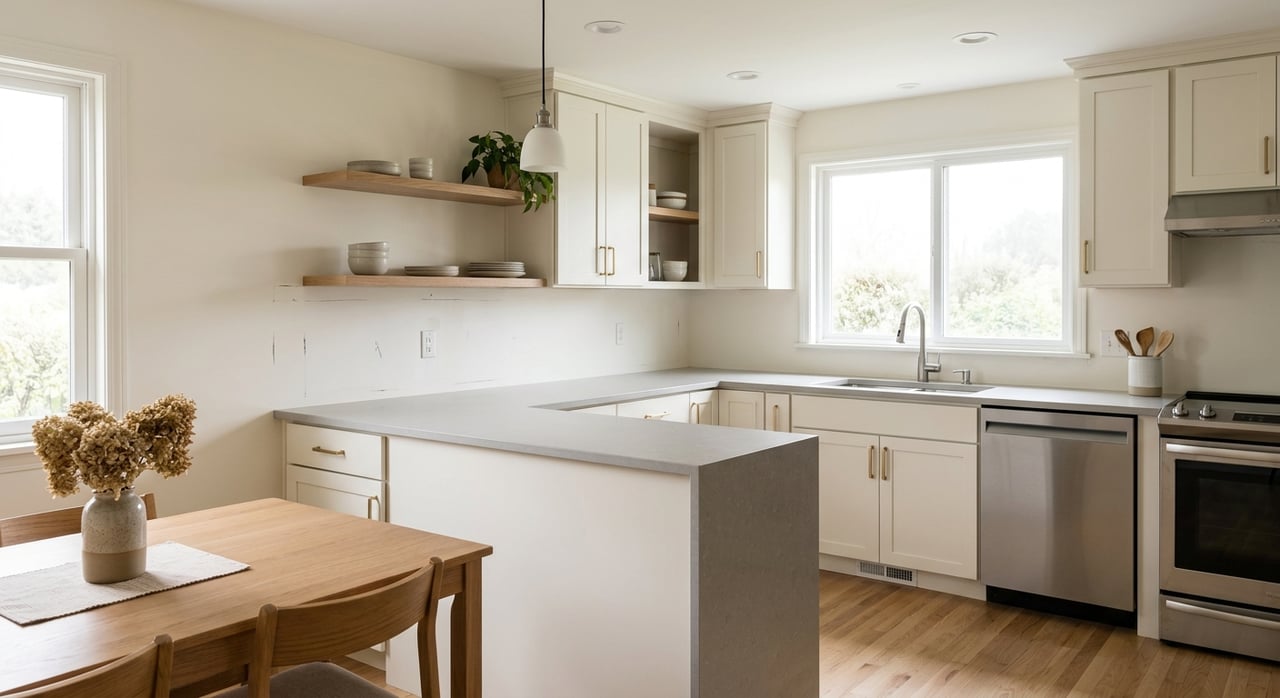
Kitchen Updates
Daly City lists kitchen remodels as eligible for quick permits. According to Angi’s 2026 guide, a small kitchen remodel may run about $10,500 to $20,000, while broader kitchen remodels commonly range from $14,586 to $41,527. Complete remodels can reach $65,000 to $130,000 or more.
Bathroom Remodels
Bathroom remodels are also listed as quick-permit work in Daly City. Angi’s 2026 bathroom guide says professional bathroom remodels commonly run $6,643 to $17,632, making them a useful mid-range project when the overall layout already works.
Electrical and Plumbing Upgrades
Electrical service upgrades are quick-permit eligible in Daly City. Angi’s 2026 rewiring guide says rewiring a typical 2,500-square-foot home costs about $5,175 to $10,275.
On the plumbing side, Daly City lists water heater replacement as a quick-permit item. Angi’s 2026 guides estimate tank-style water heater replacement at $882 to $1,817, while whole-house repiping ranges from about $1,500 to $15,000, with many homeowners paying around $7,500.
Roofs, Windows, and Exterior Work
Re-roofing and window or fenestration replacement are also quick-permit eligible. Angi’s 2026 guides estimate roof replacement at roughly $4 to $11 per square foot and window replacement at about $3,441 to $11,841 per project, or roughly $300 to $2,500 per window depending on scope.
Foundation and Sewer Repairs
Foundation work can quickly separate a cosmetic fixer from a deeper project. Angi’s 2026 foundation guide says foundation repair averages about $2,225 to $8,133, while underpinning can run $10,000 to $30,000.
Sewer line issues can also shift your budget fast. Angi’s 2026 sewer guides say repairs often cost $1,100 to $4,100, while replacement is commonly priced at about $50 to $250 per linear foot.
Understand Daly City’s Permit Path
Daly City says a permit is required to alter, construct, convert, demolish, enlarge, improve, move, remove, or repair a building or structure. That broad rule makes permit planning part of almost every meaningful renovation conversation.
The good news is that some common projects can move through the city’s quick-permit process. These include bathroom remodels, kitchen remodels, electrical service upgrades, EV chargers, furnace replacement, garage door replacement, re-roofing, siding or stucco replacement, water heater replacement, and windows or fenestration replacement.
For additions, the city’s residential additions guide says plans are normally reviewed within fifteen working days, while the current permits page notes that initial plan review is taking about three weeks. The city also notes that homeowners may obtain permits if they or immediate family are doing the work, but if the work is done by others for compensation, a California licensed contractor must obtain the permit.
If your project includes an addition, inspection steps generally include:
- Foundation
- Underfloor plumbing
- Framing
- Rough electrical, plumbing, and mechanical
- Insulation
- Sheetrock nailing
- Final inspection
ADU Potential Can Be a Major Plus
For some Daly City properties, an ADU can be one of the most compelling renovation angles. The city says conflicting local regulations were superseded by state law effective January 1, 2020 until the city adopts a local ordinance.
The city’s ADU guidance also says owner occupancy is not required for ADUs as of January 1, 2024 under CA AB 976, though owner occupancy is still required for JADUs. It also notes that fire sprinklers are no longer required in an ADU if they are not required in the primary residence.
Daly City also has a preapproved ADU program that can help reduce design friction. Even so, the city notes that preapproved plans still require site-specific plans, studies, and engineering. In practice, that means preapproval can simplify part of the process, but it does not eliminate due diligence.
Three Common Renovation Buckets
In Daly City, most renovation candidates tend to fall into three practical categories. Knowing which bucket a home fits into can help you judge whether the opportunity matches your budget and goals.
Good Bones, Dated Finishes
These are often the cleanest opportunities. The layout mostly works, the structure appears solid, and the home mainly needs updates to kitchens, baths, flooring, paint, windows, or similar features.
Lower-Level or ADU Opportunity
These homes may offer extra value through a lower-level conversion, legal living area expansion, or ADU path without requiring a major footprint increase. This kind of upside can be attractive if parking, lot coverage, and permit requirements line up.
Heavy Systems-First Renovation
These properties may look affordable at first, but the budget has to absorb roof, plumbing, electrical, foundation, or seismic work before cosmetic improvements begin. Sometimes that still makes sense, but only if you go in with clear numbers and realistic expectations.
How to Evaluate a Daly City Home More Clearly
When you tour a home with renovation potential, try to move past surface-level finishes. A fresh coat of paint can hide a lot, while an outdated interior can sometimes sit on top of a very workable structure.
A smart review usually includes the layout, visible signs of deferred maintenance, seismic considerations, permit history, and the likely path for any additions or ADU plans. In a market like Daly City, the best decisions usually come from understanding both cost and possibility at the same time.
That is where local knowledge and construction fluency can really help. If you are buying, selling, or sizing up a property with renovation upside in Daly City, working with someone who can connect layout, permits, and value can make the process a lot clearer. If you want practical guidance on a specific home or project angle, connect with Perry Kayasone.
FAQs
What should you inspect first in a Daly City home with renovation potential?
- Start with the layout, roof, plumbing, electrical, foundation, and signs of seismic vulnerability, since these items often shape the real budget more than cosmetic finishes.
How can you check if past Daly City home renovations were permitted?
- You can request the city’s 3R report, which costs $124 and is intended to provide residential building record, enforcement, and zoning history.
Do Daly City home remodels usually need permits?
- Yes. Daly City says permits are required for altering, constructing, converting, demolishing, enlarging, improving, moving, removing, or repairing a building or structure.
Which Daly City renovation projects may qualify for quick permits?
- Common quick-permit items include kitchen remodels, bathroom remodels, electrical service upgrades, furnace replacement, garage door replacement, re-roofing, siding or stucco replacement, water heater replacement, and window replacement.
Can a Daly City property have ADU potential?
- Yes. Some properties may support an ADU, and the city says owner occupancy is not required for ADUs as of January 1, 2024, though JADUs still require owner occupancy.
Why do seismic checks matter in older Daly City homes?
- Older homes may have crawl spaces, cripple walls, unbolted foundations, or garage-wall bracing issues that can affect safety, scope, and renovation cost.